 © Private
Finding Your Own Path with Courage, Guidance, and Personal Support
Doubts about studies and the search for direction
In an era where educational paths are becoming increasingly diverse and individualized, many students find themselves in doubt. Not every academic journey follows a straight path—and especially in stressful situations, there is often a lack of guidance, opportunities for discussion, and suitable support services. This is precisely where the open-ended counseling and individual support offered by “Umsteigen statt Aussteigen”—a program of the Region Hannover Employment Promotion Office—comes in.
Hannah first came into contact with the program in late 2022 through the Career Service at Leibniz University Hannover. She had earned a bachelor’s degree in social sciences and was already enrolled in the master’s program “Science and Society,” but suddenly found herself in a difficult situation: She had failed her bachelor’s thesis, and it became necessary to withdraw from the master’s program.
“I wanted to seek support and not face the new challenges of reorientation alone,” Hannah says, looking back on her motivation. It was particularly important to her to be able to reevaluate different educational paths, make new professional contacts, and gain new courage, confidence, and clarity for her future.
Individual Support and New Perspectives
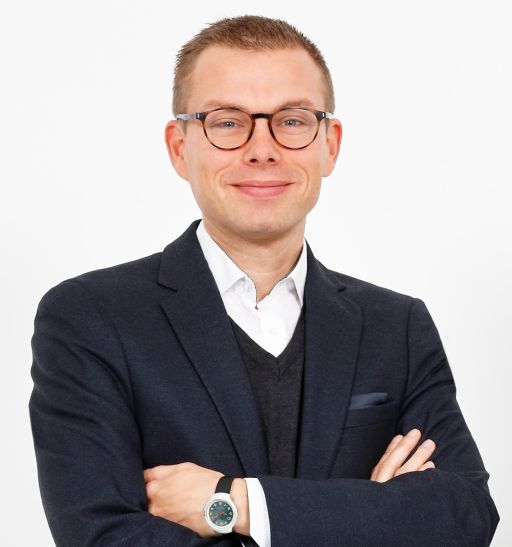
As part of the counseling, Hannah gained access to various support services offered by “Umsteigen statt Aussteigen.” In addition to personal conversations and coaching tools, these included guidance on the job and education markets, practical decision-making methods, and contacts with employers and other counseling centers. Throughout the process, Marcus Voitel, director of the “Umsteigen statt Aussteigen” program, stood by her side.
Particularly valuable for Hannah was the safe space for honest conversations about fears, uncertainties, and new possibilities. Looking back, she describes the support as crucial:
Over the course of the counseling, it became clear that Hannah saw her interests and strengths particularly in the field of education. She therefore decided on a new path: a career change into part-time training to become a social education assistant.
New confidence and important successes
 © Private
The transition from university studies to vocational training was initially challenging for Hannah. At the same time, she found the practical work enriching and motivating. She was particularly interested in the educational aspects of her work at the kindergarten. In addition, she completed two fitness trainer certifications, which she also greatly enjoyed and which opened up new career prospects. Hannah successfully completed her training as a social education assistant at the end of July 2024. At the same time, she was already working part-time in the social sector, which gave her not only professional security but also financial independence.
Moreover, she retains the sense of being able to provide for herself financially, of having achieved a sense of accomplishment, and of having a foundation on which to build. A special milestone followed shortly thereafter. Despite all her doubts and fears, Hannah was also able to successfully complete her bachelor’s degree:
Conclusion: Making Individual Paths Visible
Hannah’s story impressively demonstrates how important individual counseling, personal guidance, and open-ended support can be when facing doubts about one’s studies. Not every educational path follows a straight line—and alternative paths, in particular, can open up new opportunities, stability, and personal satisfaction.
By “switching tracks instead of dropping out,” Hannah was able to chart her own course, build career prospects, and simultaneously successfully complete her original academic goal. This success story makes it clear that reorientation does not mean failure, but is often the beginning of a more suitable and sustainable path.
Through this program, the Hannover Region supports students in recognizing their potential, making bold decisions, and developing individual pathways between higher education and the workforce.
Contact
Marcus Voitel
Hannover Region
Employment Promotion
Department of Economic and Employment Promotion