THE FUTURE NEEDS DIVERSITY Award
The award for exemplary practices in companies in the region


 © Region Hannover
 Through the initiative “ZUKUNFT braucht VIELFALT” (The Future Needs Diversity), we support companies in actively leveraging diversity in teams, leadership, and networks across multiple dimensions simultaneously—as a catalyst for creativity, market access, and securing a skilled workforce. Through funding programs, competitions, and exchange initiatives, we help companies and municipalities make equal opportunity and international openness the norm. Regions that promote diversity not only attract talent but are also pioneers of economic transformation.
Diversity is a key factor for the future—for society as a whole and for the economy. After all, the world of work is changing! Demographic trends are affecting the availability of skilled workers, while digitalization requires new skills but also enables the development of new business models and creates opportunities for participation (Diversity Charter, 2024).
As an employer, the Hannover Region has been a signatory to the Diversity Charter since 2021 and is thus clearly committed to diversity in the workplace.
Embracing and valuing diversity within the company is not only a sociopolitical responsibility but also boosts economic success!
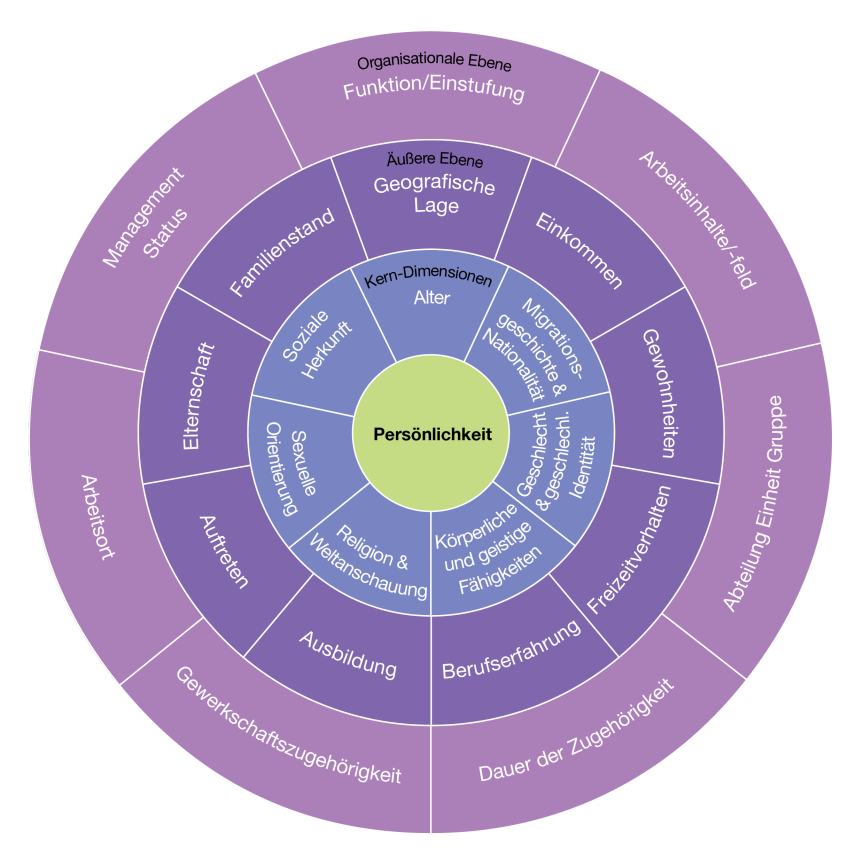
The Diversity Charter identifies seven dimensions of diversity that are most closely linked to an individual’s identity: age, migration background and nationality, gender and gender identity, physical and mental abilities, religion and worldview, sexual orientation, and social background.
In addition to these core dimensions, external factors such as income and professional experience are also relevant. Unlike the core dimensions of diversity, these are significantly more variable. When considering diversity, it is important to take into account both its holistic nature and its intersectionality—that is, the interplay of multiple identity characteristics.
The core dimension of age refers to employees of different ages, from young professionals just starting their careers to experienced specialists—that is, Traditionals, Baby Boomers, and Generations X, Y, and Z. Different generations often exhibit different characteristics, perspectives, and value systems, which presents both challenges and opportunities. It is important to recognize the skills and perspectives of all age groups, ensure the transfer of knowledge between generations, and implement a life-stage-oriented human resources policy.
Examples of measures: creating age-appropriate workplaces, introducing mentoring or knowledge-transfer programs, and implementing health management.
The diversity dimension of migration history and nationality describes people from different cultural backgrounds, nationalities, and skin colors. This involves valuing people of different national and ethnic origins, overcoming prejudices, and promoting intercultural competencies. Diversity—or a prejudice-free work environment—in this dimension enriches companies through diverse perspectives, creativity, and innovative strength.
Examples of measures: Diverse team composition; offering intercultural training; promoting language training.
The dimension of gender and gender identity aims to achieve equality and promote all genders in the workplace. The goal is to overcome stereotypes and build a corporate culture that ensures equal career opportunities and pay for all genders and gender identities. Raising awareness of gender diversity, creating flexible working conditions, and fostering equal opportunities and acceptance are key aspects of this dimension.
Examples of measures: designing gender-sensitive recruiting and promotion processes, creating gender-diverse teams, and providing leadership training focused on unconscious biases.
The inclusion of people with disabilities, chronic illnesses, or neurodivergent individuals is central to this dimension. The goal is to break down barriers, improve accessibility, and adapt the work environment so that all employees can fully develop their abilities. Raising awareness and offering specific support services help foster an inclusive work environment.
Examples of measures: Supporting young people with severe disabilities in vocational training, collaborating with disability organizations, and setting up accessible workplaces.
The Religion & Beliefs dimension refers to the recognition and inclusion of various faiths, spiritual, and secular beliefs. Companies that take this dimension into account create a culture of openness, tolerance, and respect in which religious and ideological needs are accommodated and accepted.
Example measures: Setting up quiet rooms, adapting cafeteria offerings to religious customs, and taking religious holidays into account (e.g., when planning vacations or scheduling important meetings).
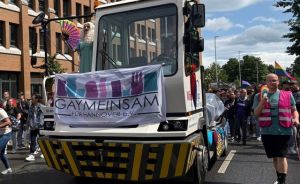
This dimension encompasses the recognition and support of queer individuals in the workplace. Companies should create an atmosphere of acceptance in which employees can openly express their identity and personality—without fear of discrimination. Diversity-conscious policies and open communication are essential for this.
Examples of measures: Launch an LGBTIQ* network; conduct an assessment to identify and eliminate discrimination.
Social background refers to the diverse life experiences and educational paths that people bring to the workplace. Unfortunately, social background still influences educational and labor market opportunities today. Recognizing this diversity means promoting equal opportunity, breaking down prejudices, and identifying and utilizing talent regardless of socioeconomic background.
Examples of measures: Supporting people with low levels of education in their training; implementing a mentoring program for employees from non-academic backgrounds; involving social enterprises; and initiating joint projects.