
A Fresh Start Creates Real Future Prospects for Skilled Workers and Daycare Centers
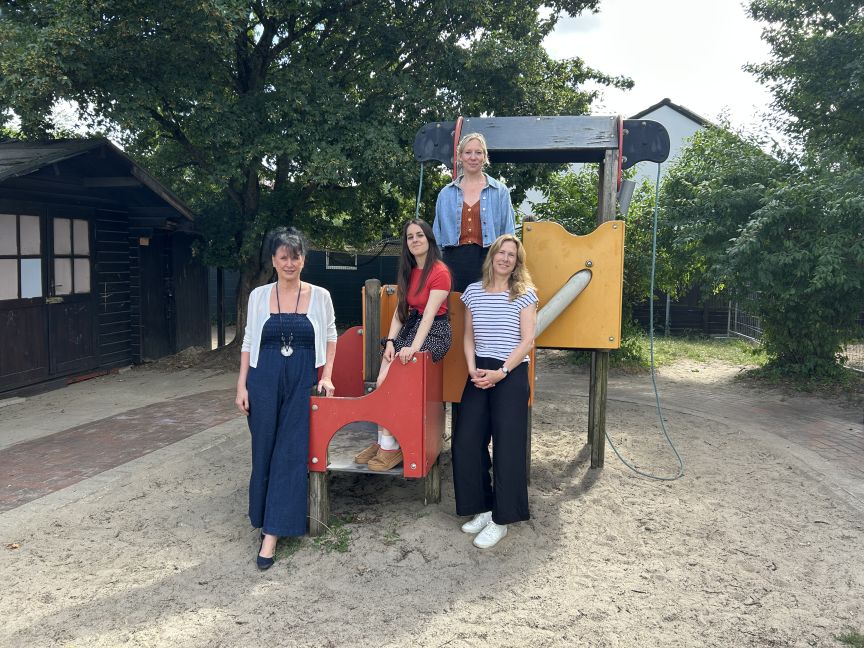 © Region Hannover/Annkatrin Ngo
The shortage of skilled workers calls for new approaches
The numbers are clear: The demand for early childhood education professionals in the Hannover region is growing rapidly. In 2025, the demand was already approximately 8,025 full-time equivalents (FTEs), of which only about 7,185 full-time positions were filled. By 2035, approximately 11,000 professionals are expected to be needed—assuming a similar distribution, this means a shortfall of nearly 2,800 full-time positions despite high training numbers.
The consequences have long been felt in everyday life: daycare groups have to close temporarily, opening hours are being restricted, continuing education programs are being canceled, and the workload on staff is steadily increasing. At the same time, many employees are leaving the profession earlier than planned.
It is clear that traditional training pathways alone will not meet the demand. That is why the Hannover Region is also turning to international skilled workers.
A program that offers more than just a job
This is exactly where the “Hola Kita!” project comes in. What began in its first iteration under the name “Recognition Support for Spanish Early Childhood Educators” has since developed into a key component of the region’s efforts to secure a skilled workforce in the field of childcare.
What makes it special is that participants from Spain receive not just a job, but a comprehensive package of support. This includes, among other things: support with the recognition process, a permanent employment contract, language support, classes at the BBS Vocational Schools in Neustadt am Rübenberge, accommodation with a host family, intensive support from the project organizer Caritasverband Hannover e.V., as well as joint leisure activities and networking with other participants from Spain. The focus here is on Spanish professionals, as there is a surplus of early childhood educators in Spain and many are unable to find jobs in their own country.
The goal is to obtain state certification as a childcare worker and secure long-term employment at a childcare center in the Hanover region.
Vanesa’s Journey Begins in Valencia
For Vanesa Picher Sánchez, her desire was clear: she wanted to work with children. The 30-year-old is from Valencia and gained experience early on through summer camps and internships in the social sector. First, she completed a two-year training program in Spain to become a social assistant specializing in children ages 0 to 3. Part of the training included a two-month internship in Dublin. To be able to work with children ages three to six as well, she then decided to pursue a four-year degree in early childhood education in Valencia.
After completing her studies, she discovered the Region of Hanover’s project on the international job platform InfoJobs, which convinced her to apply. Participants must hold a Spanish university degree, the “Grado en Educación Infantil,” which is comparable to a state-certified early childhood educator degree. After successfully applying and completing the program’s observation week in 2024, Vanesa arrived in Germany on January 21, 2025.
Getting to Know a New Work Environment
Even during her observation week at the Corpus Christi facility of the Catholic Family Center of St. Raphael Parish in Garbsen, Vanesa was enthusiastic about working in a German daycare center, yet much of it was new to her. In Spain, daycare centers are much more structured and school-like, with regular lessons similar to those in preschool. In Germany, on the other hand, the focus is on free play and independent learning, which is why the role of the early childhood educator is quite different.
But that was exactly what the recognition year was for. During her training, Vanesa worked in a nursery, a daycare center, and an after-school care program, gradually gaining confidence in the day-to-day routine of a German daycare center. She was particularly impressed by the friendliness and openness of the children, their independence, and the fact that more staff are available to care for them. In Spain, one educator must care for 25 children, whereas in Germany, at least two educators are assigned to the same number of children.
Support that goes far beyond the job
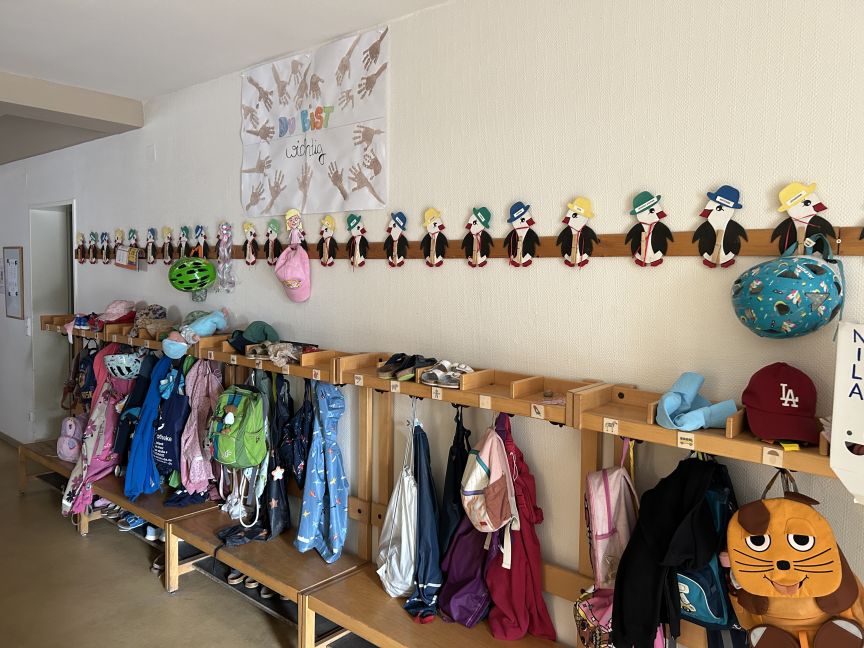 © Region Hannover/Annkatrin Ngo
A key factor in the project’s success is the intensive support provided by Caritasverband Hannover e.V. The contact person, Sabrina Heinrich, speaks fluent Spanish and supports the participants not only with organizational issues but often also with personal life situations. For example, she helps with dealing with government agencies, contracts, finding housing, translations, exam preparation, and questions about everyday life in Germany. In addition, she regularly visits the daycare centers during the recognition year, provides information about upcoming field placements, and helps participants prepare for exams at the BBS.
For example, when Vanesa was looking for an apartment with another participant after six months, Caritas actively supported her in discussions with landlords and explained the project’s circumstances regarding her stay in Germany and the lack of pay stubs. Even today, after completing the program, Vanesa knows she can reach out to her contact person at any time.
Settling in also means belonging
In addition to professional integration, the social environment also played an important role. At first, Vanesa lived with a host family of Spanish descent. Since July 2025, she has been living in a shared apartment in Hannover Mitte with another participant in the program. She is still in touch with her host family and meets regularly with her former host parents.
Equally important to her is the Spanish community in Hanover. Many former participants meet regularly, celebrate together, or—as they did most recently during the World Cup—watch the Spanish national team’s games together.
For Kerstin Jennrich, director of the Corpus Christi Catholic Family Center and executive director of the four Catholic family centers in Garbsen, this is a key factor in the program’s success:
“It’s important to have local groups from the participants’ home countries that they can connect with. That makes settling into a foreign country so much easier.”
Diversity as a Strength in Day-to-Day Daycare Life
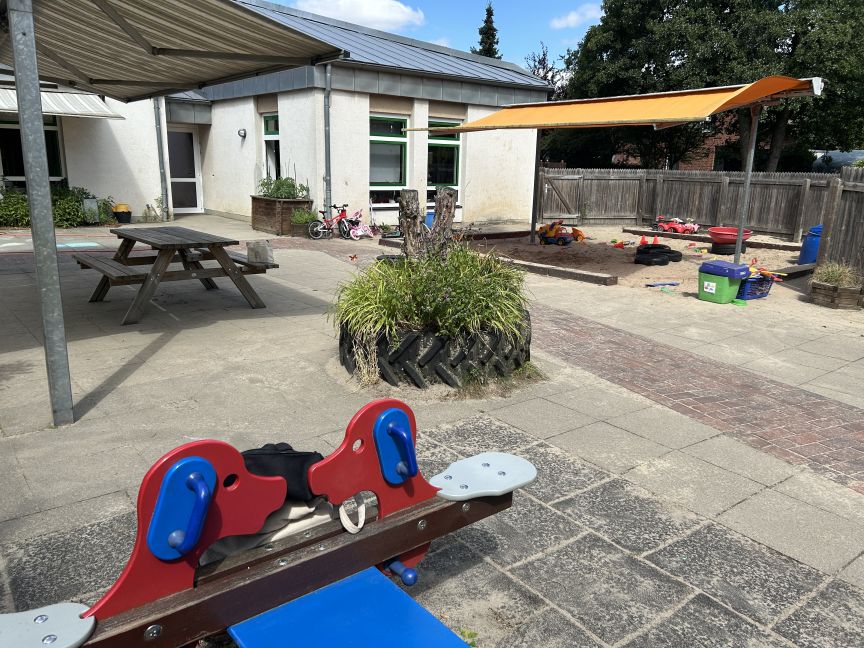
The Corpus Christi Catholic Family Center is one of four Catholic family centers in Garbsen that are now participating in the project. The center has 13 staff members and 85 children. International teams have long been part of everyday life there. Colleagues from Mexico, Poland, Turkey, and Spain work together as a matter of course. The children also experience this diversity. For example, Vanesa cooked Spanish dishes together with an after-school care group and playfully incorporated her culture into the daycare’s daily routine.
The organization received a request from Garbsen City Hall to participate in the program. Kerstin Jennrich was convinced of its value and subsequently applied on behalf of all four centers. In the first round, two centers were already selected to participate. In the second round, the other two centers were selected. The only hurdle to participation was finding host families willing to take in the Spanish educators for several months. Through the church network, two suitable families were quickly found, and they were willing to host a Spanish educator again in the second round as well.
The Major Milestone
In January 2026, it was a done deal. Along with eleven other Spanish participants, Vanesa successfully passed her certification exam and received her certificate from the State of Lower Saxony as a state-certified early childhood educator. Since February 1, 2026, she has been working under a permanent contract at the Corpus Christi Catholic Family Center in Garbsen as a substitute, working in the infant care center and daycare in the mornings and in the after-school care program in the afternoons. Today, she cares for children independently, communicates directly with parents via the daycare app, and takes on responsibilities in the infant care center, daycare, and after-school care program. The participant has long since become a full-fledged colleague.
The program also pays off for the municipalities themselves. The Hannover Region provides administrative and financial support throughout the entire certification process. This makes it possible to attract qualified professionals and retain them for the long term. In the first round, all twelve participants successfully earned their certification. Most of them subsequently began working at their respective facilities under permanent employment contracts. — A success for everyone involved.
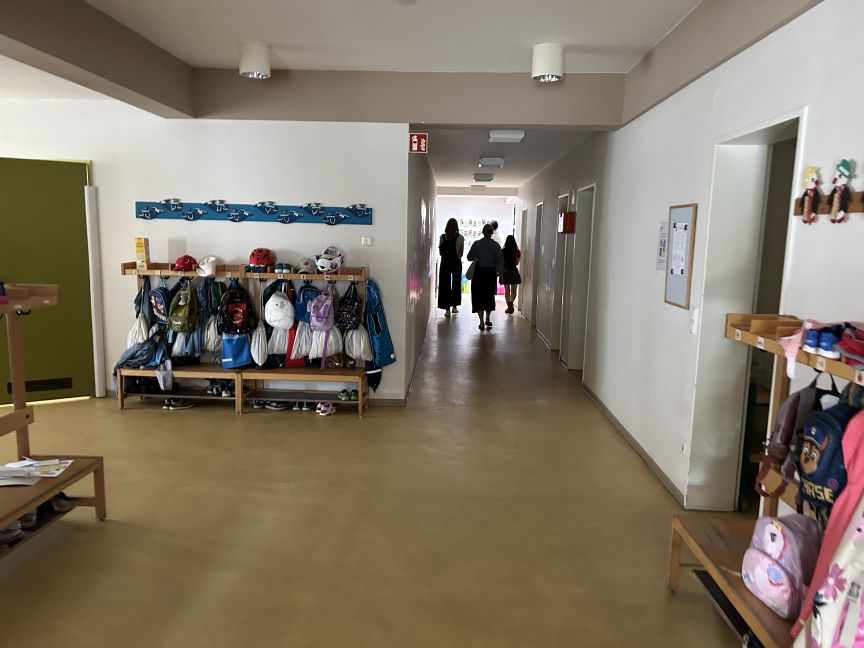 © Region Hannover/Annkatrin Ngo
Shaping the Future Together
Vanesa Picher Sánchez regularly visits her family and boyfriend in Valencia; she was last in Spain for a short visit in March and May. However, her life is now centered in Hannover. Vanesa appreciates the improved staff-to-child ratio, the educational work, the security of a permanent contract, and the warm welcome she received from the team.
Her story impressively demonstrates how the recruitment of international skilled workers can succeed: with thorough preparation, personalized support, and a genuine culture of welcome. After all, securing a skilled workforce means far more than just recruiting staff. It means opening up new prospects for people—and shaping the future together.
Contact
Leena Wilke
Hanover Region
Employment Promotion
Department of Economic and Employment Promotion